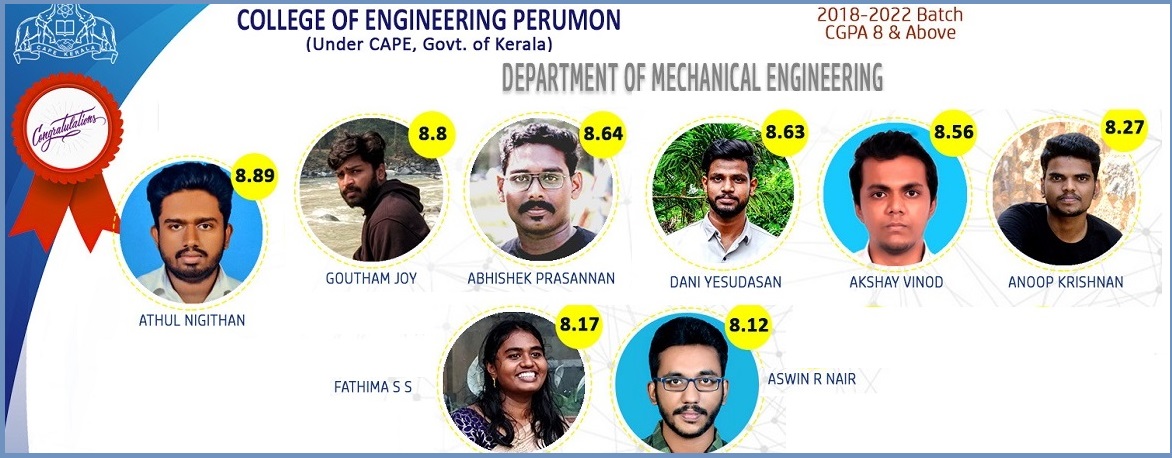
The Department of Mechanical Engineering at College of Engineering Perumon was established in the year 2011 offering B.Tech programme in Mechanical Engineering. With a right blend of theory and practice, this programme has well laid itself as a prominent option for students. The department has a team of well qualified and experienced faculty in all streams of mechanical engineering who always stride for imparting quality education. State-of-the-art laboratories in the department help to mould engineering graduates as per the curriculum requirements. The department is continuously striving to achieve excellence in mechanical engineering education and research with service to the society.
Excel in mechanical engineering education and research for overall sustainable development.
Full Time Undergraduate Programme , 4 Years (8 Semesters)
Candidates who have passed Higher Secondary Examination, Kerala, or Examinations recognized as equivalent thereto, with 50% marks in Mathematics separately, and 50 % marks in Mathematics, Physics and Chemistry put together are eligible for admission. However candidates who have passed Higher Secondary Examination, Kerala, or Examinations recognized as equivalent thereto, with 45% marks in Mathematics, Physics and Chemistry put together are eligible for admission under Management Quota. Candidates belonging to Socially and Educationally Backward Classes will have a relaxation of 5% marks in the qualifying examination. They need only 45% marks in the case of Mathematics and 45% marks in the case of Mathematics, Physics and Chemistry put together. The Scheduled Castes and Scheduled Tribes candidates need only a pass in the qualifying examination.
Reservation to SC, ST and other communities are available as per rules and regulations of the Government from time to time.
The admission will be based on the rank list prepared by the Commissioner of Entrance Examinations, Government of Kerala.
Engineering diploma holders are eligible for admissions to second year B. Tech, based on the rank list prepared by the Directorate of Technical Education, Government of Kerala.
Click here for Detailed Profile
| PROGRAMME EDUCATIONAL OBJECTIVES (PEOs) |
|---|
| Engineering graduates in mechanical engineering will be able to achieve the following objectives during the first few years after graduation; |
| PEO 1: Excel in engineering profession and exhibit leadership skills to flourish in academia and industry. |
| PEO 2: Enhance technical competency through lifelong learning to face the global challenges effectively. |
| PEO 3: Pursue research in the field of mechanical engineering to fulfill the technological needs of the society with economical, environmental and ethical concerns. |
| PROGRAMME OUTCOMES (POs) |
|---|
| Engineering graduates will be able to: |
| PO 1: Engineering knowledge: Apply the knowledge of mathematics, science, engineering fundamentals, and an engineering specialization to the solution of complex engineering problems. |
| PO 2: Problem analysis: Identify, formulate, review research literature, and analyze complex engineering problems reaching substantiated conclusions using first principles of mathematics, natural sciences, and engineering sciences. |
| PO 3: Design/development of solutions: Design solutions for complex engineering problems and design system components or processes that meet the specified needs with appropriate consideration for the public health and safety, and the cultural, societal, and environmental considerations. |
| PO 4: Conduct investigations of complex problems: Use research-based knowledge and research methods including design of experiments, analysis and interpretation of data, and synthesis of the information to provide valid conclusions. |
| PO 5: Modern tool usage: Create, select, and apply appropriate techniques, resources, and modern engineering and IT tools including prediction and modelling to complex engineering activities with an understanding of the limitations. |
| PO 6: The engineer and society: Apply reasoning informed by the contextual knowledge to assess societal, health, safety, legal and cultural issues and the consequent responsibilities relevant to the professional engineering practice. |
| PO 7: Environment and sustainability: Understand the impact of the professional engineering solutions in societal and environmental contexts, and demonstrate the knowledge of, and need for sustainable development. |
| PO 8: Ethics: Apply ethical principles and commit to professional ethics and responsibilities and norms of the engineering practice. |
| PO 9: Individual and team work: Function effectively as an individual, and as a member or leader in diverse teams, and in multidisciplinary settings. |
| PO 10: Communication: Communicate effectively on complex engineering activities with the engineering community and with society at large, such as, being able to comprehend and write effective reports and design documentation, make effective presentations, and give and receive clear instructions. |
| PO 11: Project management and finance: Demonstrate knowledge and understanding of the engineering and management principles and apply these to one's own work, as a member and leader in a team, to manage projects and in multidisciplinary environments. |
| PO 12: Life-long learning: Recognize the need for, and have the preparation and ability to engage in independent and life-long learning in the broadest context of technological change. |
| PROGRAMME SPECIFIC OUTCOMES (PSOs) |
|---|
| Engineering graduates in mechanical engineering will be able to: |
| PSO 1: Design and analyse mechanical systems to provide sustainable solutions for real world problems |
| PSO 2: Apply efficient manufacturing and management practices to face the challenges of the industry and society at large. |
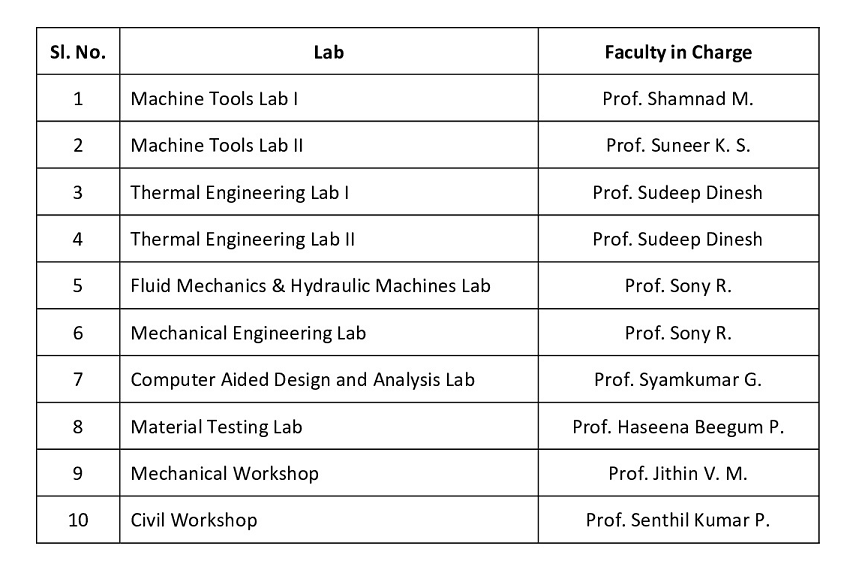
| LABORATORIES – DEPARTMENT OF MECHANICAL ENGINEERING, CE PERUMON |
|---|
 |
| Sl No. | Year | Name | Rank |
|---|---|---|---|
| 1 | 2017 | ANANTHAKRISHNAN R | II |
| 2 | HARI KRISHNA | III | |
| 3 | PRAVEEN S | IV | |
| 4 | ARUNRAJ B | V | |
| 5 | ANANDHU R | IX |
The Royal Association of Mechanical Engineering Students (TRAMS) was established in the year 2013. The objective is to organize various activities such as seminars, workshops, industrial visits, technical contests etc for the benefits of students in mechanical engineering. The association helps the students to explore and sharpen their technical and creative skills through its activities.
SAEINDIA is India's leading resource for mobility technology. As an individual member-driven society of mobility practitioners the ownership of SAEINDIA wrests with its members who are Individuals from the mobility community, which includes Engineers Executives from Industry, Government Officials, Academics and Students SAEINDIA is a strategic alliance partner of SAE International registered in India as an Indian nonprofit engineering and scientific society dedicated to the advancement of mobility industry in India.
The SAE chapter in the college is actively participating the events organized by SAEINDIA.
Activities (2019-20)
• Electric Vehicle Two where Designing competition (Registered))
•Bicycle Designing Competition (Registered)
• Student convention (TIER I)
Sheet Metal
Mechanical CAD
3D Printing
Engineering Problem Solving
Auto Quiz
Python Programming
Engineering Drawing
Material Identification
Welding
How Things Work
Bicycle Assembly
| EVENTS ORGANISED |
|---|
|
Faculty Development Programme on Supply Chain and Logistics Management, December 03 – 05, 2019. |
|
Faculty Development Programme on Outcome Based Education for NBA Accreditation, October 10 – 12, 2019. |
|
2nd National Conference on Recent Trends in Mechanical and Civil Engineering (NCRTMCE 2019), May 8 – 9, 2019. |
|
Faculty Development Programme on Micro and Nano Manufacturing, January 10 – 12, 2019. |
|
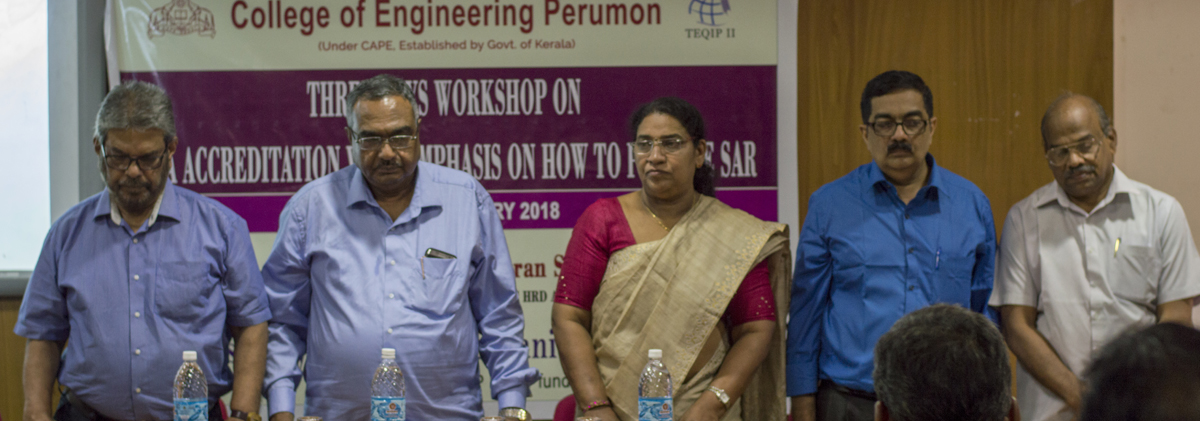
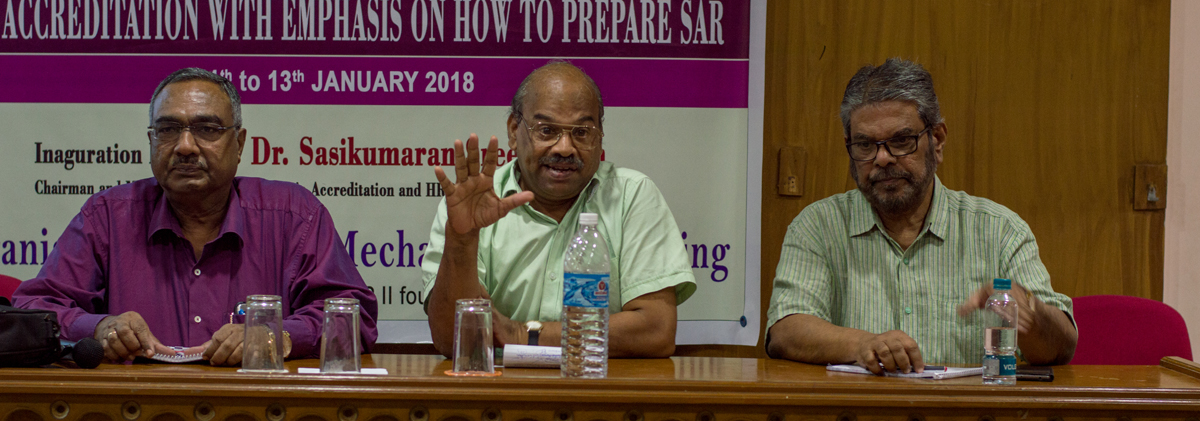
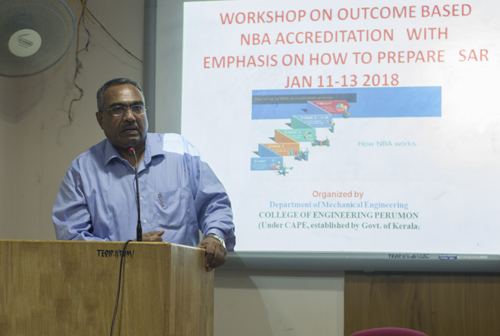
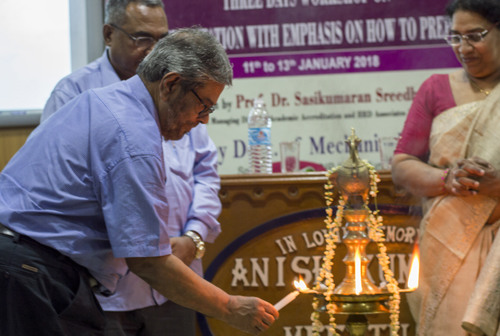
Workshop on Outcome Based NBA Accreditation with Emphasis on How to Prepare SAR, January 11 – 13, 2018. |
|
1st National Conference on Recent Trends in Mechanical and Civil Engineering (NCRTMCE 2017), March 10 – 11, 2017. |